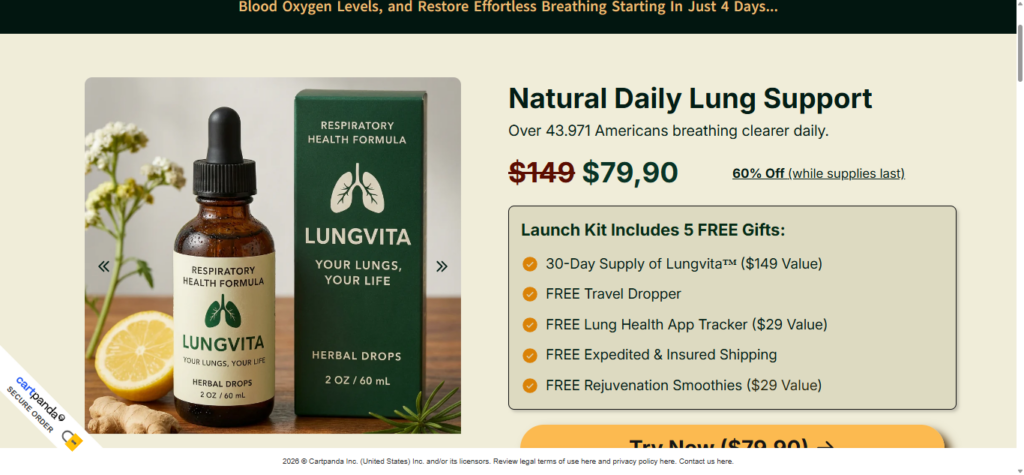
LungVita Drops are promoted online as a natural respiratory support supplement that “clears mucus,” “boosts oxygen levels,” and even “repairs lung tissue” — claims that sound appealing but deserve careful examination. In this review, we break down what LungVita Drops are, what the science says about its ingredients, whether it’s safe, and whether it lives up to the marketing hype.
What Are LungVita Drops?
LungVita Drops are advertised as a herbal respiratory support formula that comes in dropper form. According to promotional material, the product includes plant‑based extracts traditionally used in herbal medicine for breathing support.
The official LungVita site claims the drops help with:
- Clearing mucus and improving airway comfort
- Increasing oxygen utilization in the lungs
- Strengthening lung tissue and support
- Rapid results with regular use
Marketing sections can be persuasive, but there is no clinical evidence that LungVita cures, treats, or prevents lung diseases like COPD or chronic bronchitis. Ads claiming “17‑hour lung repair” and celebrity endorsements in video presentations have been shown to be misleading or fabricated using deepfake techniques.
Official LungVita Drops site: https://lungvita.com/?utm_source=chatgpt.com
Breaking Down Common Ingredient Claims
While the LungVita Drops formula itself hasn’t been independently studied in clinical trials, several of the herbs often cited in respiratory remedies do have traditional uses. However, tradition is not the same as proven medical effectiveness:
Mullein Leaf
Mullein (Verbascum thapsus) has been used in herbal traditions to help soothe coughs and support mucus clearance. Some plant compounds may act as expectorants to help make coughs more productive. However, quality human research is limited.
Licorice Root
Licorice root is another herb commonly included in respiratory formulas for its soothing and anti‑inflammatory properties. That said, licorice contains glycyrrhizin, which can raise blood pressure and interact with medications, especially for people with heart or kidney conditions.
Thyme & Other Botanicals
Herbs like thyme are sometimes included for their traditional bronchodilating or antibacterial properties, but the scientific evidence is modest and often based on isolated compounds or animal studies.
Coltsfoot Caution
Some traditional recipes use coltsfoot, but modern guidance strongly advises caution because it contains toxic pyrrolizidine alkaloids that may harm the liver.
What Research Says About Lung Supplements
According to expert sources like Medical News Today, supplements marketed for lungs may contain vitamins or herbal extracts, but there’s no strong evidence that any dietary supplement can cure respiratory disease or replace medical treatments. The U.S. Food and Drug Administration (FDA) does not evaluate supplements for effectiveness before they’re sold.
If you’re considering a lung supplement, experts recommend the following:
- Consult a healthcare provider, especially with existing breathing conditions
- Don’t assume “natural” means “safe for everyone”
- Check for third‑party testing or certification
Claims vs. Reality: Why LungVita Marketing Should Be Viewed with Skepticism
Marketing videos for LungVita that suggest it’s a breakthrough discovered by celebrities or tech innovators have been debunked as fake or fabricated to generate urgency and trust. These videos often lead directly to a sales page with bold claims and testimonials, but independent validation is lacking.
There is currently no peer‑reviewed clinical study proving LungVita Drops deliver the advertised health outcomes.
Potential Benefits (and Limitations)
Potential Supportive Effects:
- May provide minor relief for mild cough or throat irritation
- Some ingredients could loosely support traditional respiratory comfort
Limitations Noted:
- Not proven to treat or cure lung diseases
- No published clinical trials on LungVita Drops
- Bold marketing claims lack scientific backing
Safety & Side Effects
While plant extracts are often seen as gentle, there are some safety considerations:
Possible risks include:
- Allergic reactions to herbal components
- Licorice‑related blood pressure effects
- Risk of liver toxicity with certain herbs like coltsfoot
- Interaction with medications
Always consult a healthcare professional if you have health conditions, take prescription drugs, or are pregnant or nursing.
How to Choose Lung Supplements Wisely
Here’s a general approach to evaluating any lung support product (including LungVita):
- Look for third‑party testing (NSF, USP, ConsumerLab)
- Beware of exaggerated claims like “cures disease”
- Check ingredient safety profiles individually
- Consult with a doctor before use
A reputable overview of lung supplements and their evidence can be found on Medical News Today:
➡️ What to know about lung supplements What to know about lung supplements (Medical News Today)
Conclusion: Is LungVita Drops Worth It?
LungVita Drops may contain herbs traditionally used in respiratory comfort formulas, but the product is not backed by clinical research as a treatment or cure for lung disease. Marketing claims about rapid lung repair lack credible evidence and have been tied to misleading videos and fabricated endorsements.
If you’re considering LungVita Drops or similar supplements:
- Treat them as supportive wellness products, not medical therapies
- Consult a healthcare provider about your lung health
- Focus on proven treatments if you have chronic or serious respiratory conditions
FAQs
Is LungVita Drops FDA‑approved?
No. Like all dietary supplements, it is not reviewed for effectiveness by the FDA before sale.
Can it cure COPD or asthma?
No. There’s no clinical evidence it can cure lung diseases.
Does it interact with medications?
Potentially — especially herbs like licorice. Always speak to a healthcare provider.
Related Scam Alerts and Review
- GrabCard $750 Costco Gift Card Offer
- Tarovoucher.online Review
- Hoemux Review
- Cuehox.com Review
- Bakiwex Review
- Azure Melbourne Clothing Sale Review