Introduction
Resia Ceylon Cinnamon is marketed as a premium wellness supplement designed to support blood sugar balance, metabolism, and overall energy levels. With bold positioning such as “7200 mg equivalent potency” and added MCT oil for absorption, it presents itself as a high-performance solution in a crowded supplement market.
But when you strip away the branding and examine the evidence, a different picture emerges. This review provides a detailed, SEO-optimized breakdown of Resia Ceylon Cinnamon, including scientific backing, ingredient analysis, red flags, and realistic expectations.
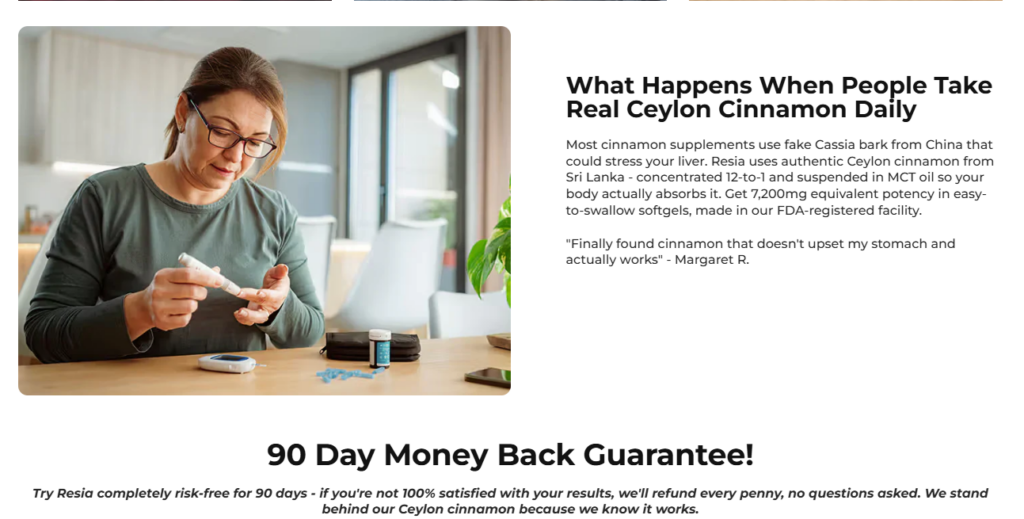
What Resia Ceylon Cinnamon Claims
According to its official product page on Resia, the supplement is designed to:
- Support healthy blood sugar levels
- Enhance metabolism and energy
- Deliver high potency through concentrated extract
- Improve nutrient absorption using MCT oil
You can explore the official product listing here:
https://tryresia.com/products/ceylon-cinnamon-7200mg-equivalent-with-mct-oil
While these claims sound compelling, they need to be evaluated against scientific evidence.
Ingredient Breakdown and Product Reality
Core Ingredients
Resia Ceylon Cinnamon typically contains:
- Ceylon cinnamon extract
- MCT (medium-chain triglyceride) oil
- Softgel capsule
There is no publicly disclosed proprietary blend or clinically validated formulation. The structure is consistent with many generic cinnamon supplements available at a lower price point.
Scientific Evidence Behind Cinnamon
Blood Sugar Regulation
Cinnamon has been studied for its potential role in glucose metabolism. Some studies suggest modest improvements in insulin sensitivity. However, the evidence is inconsistent.
According to WebMD:
https://www.webmd.com/vitamins/ai/ingredientmono-330/ceylon-cinnamon
Cinnamon may support blood sugar control slightly, but it is not a substitute for medical treatment.
Weight Loss and Metabolism
There is no strong clinical evidence that cinnamon supplementation leads to meaningful weight loss. Claims suggesting rapid fat burning or metabolic transformation are not supported by peer-reviewed research.
Antioxidant Properties
Ceylon cinnamon contains polyphenols that contribute to antioxidant activity. These compounds may support general health, but the effect size is relatively small compared to whole-diet interventions.
Key Red Flags You Should Not Ignore
1. “7200 mg Equivalent” Explained
This phrase is a marketing construct. It does not reflect a standardized dosage or guaranteed bioavailability. It is designed to create a perception of high potency without clear scientific backing.
2. Pricing vs Actual Value
Cinnamon supplements are inexpensive to produce. Many comparable products cost significantly less than Resia while offering similar ingredient profiles.
This raises a critical question:
Are you paying for quality or branding?
3. Authenticity of Ceylon Cinnamon
True Ceylon cinnamon (Cinnamomum verum) is different from cassia cinnamon, which contains higher levels of coumarin.
Coumarin has been linked to liver toxicity when consumed in large amounts. Without third-party verification, there is no guarantee of purity.
For more context, see:
https://www.webmd.com/diet/health-benefits-ceylon-cinnamon
4. Subscription Billing Risks
Many supplement brands operate on recurring billing models. While not inherently unethical, lack of transparency in subscription terms can lead to unintended charges.
Always review checkout details carefully before purchasing.
5. Lack of Transparency
There is limited publicly available information about:
- Third-party lab testing
- Ingredient sourcing
- Clinical trials specific to the product
This lack of transparency is a concern for any supplement positioned as premium.
Safety and Side Effects
Even natural supplements carry risks when used improperly.
Potential concerns include:
- Blood sugar fluctuations
- Interaction with medications
- Digestive discomfort
- Long-term safety uncertainty at high doses
Consult a healthcare professional before starting any supplement, especially if you have underlying health conditions.
Realistic User Expectations
If you decide to try Resia Ceylon Cinnamon, expect:
- Mild or no noticeable changes
- Gradual effects, if any
- Results similar to standard cinnamon supplements
It is not a quick fix or a standalone solution for metabolic health.
Pros and Cons
Pros
- Uses Ceylon cinnamon, which is generally safer than cassia
- Includes MCT oil for potential absorption benefits
- Convenient capsule format
Cons
- High price with no clear formulation advantage
- Marketing claims exceed scientific support
- Unverified ingredient sourcing
- Possible subscription-related issues
Frequently Asked Questions (FAQs)
Is Resia Ceylon Cinnamon legitimate?
Yes, it is a real product. However, it is not unique and operates within a highly competitive supplement market.
Does it help with blood sugar control?
It may provide mild support, but it should not replace medical treatment or lifestyle changes.
Can it help with weight loss?
There is no strong scientific evidence supporting cinnamon as an effective weight loss supplement.
What does “7200 mg equivalent” mean?
It is a marketing term, not a clinically validated dosage measurement.
Is Ceylon cinnamon better than cassia cinnamon?
Yes. Ceylon cinnamon contains lower levels of coumarin, making it safer for regular consumption.
Are there side effects?
Possible side effects include low blood sugar, drug interactions, and digestive discomfort.
Is it worth the price?
In most cases, no. Similar products are available at lower prices with comparable quality.
How long before results appear?
If any effects occur, they are usually mild and may take several weeks.
Can I get the same benefits from food?
Yes. Adding cinnamon to your diet can provide similar antioxidant benefits without the added cost.
Where can I buy it?
You can purchase it from the official website:
https://tryresia.com
Final Verdict
Resia Ceylon Cinnamon is not a scam, but it is not a breakthrough product either. It represents a standard supplement packaged with premium branding and pricing.
For most consumers, the smarter approach is to prioritize transparency, verified sourcing, and evidence-based health strategies.
Smarter Alternatives and Practical Recommendations
If your goal is long-term metabolic health:
- Focus on whole-food nutrition
- Increase fiber intake
- Maintain regular physical activity
- Use supplements only as supportive tools
Cinnamon can be part of a broader strategy, but it should not be the foundation.
Conclusion
Resia Ceylon Cinnamon is a classic example of modern supplement marketing. It leverages familiar ingredients, amplifies benefits, and positions itself as premium without delivering proportional value.
Before purchasing, evaluate your goals, compare alternatives, and prioritize evidence over branding.