
Introduction
Back pain is no longer an “old age problem.” It has become a modern lifestyle condition driven by prolonged sitting, poor posture, and reduced physical activity. According to the World Health Organization, low back pain is the leading cause of disability worldwide (WHO, https://www.who.int/news-room/fact-sheets/detail/low-back-pain).
This rising demand has created a wave of at-home devices promising fast relief. One of the most marketed products is the ReliveX Adaptive Correction System.
But here is the real question.
Does it genuinely help, or is it another over-marketed wellness gadget?
This review breaks it down using science, user feedback patterns, and clinical context.
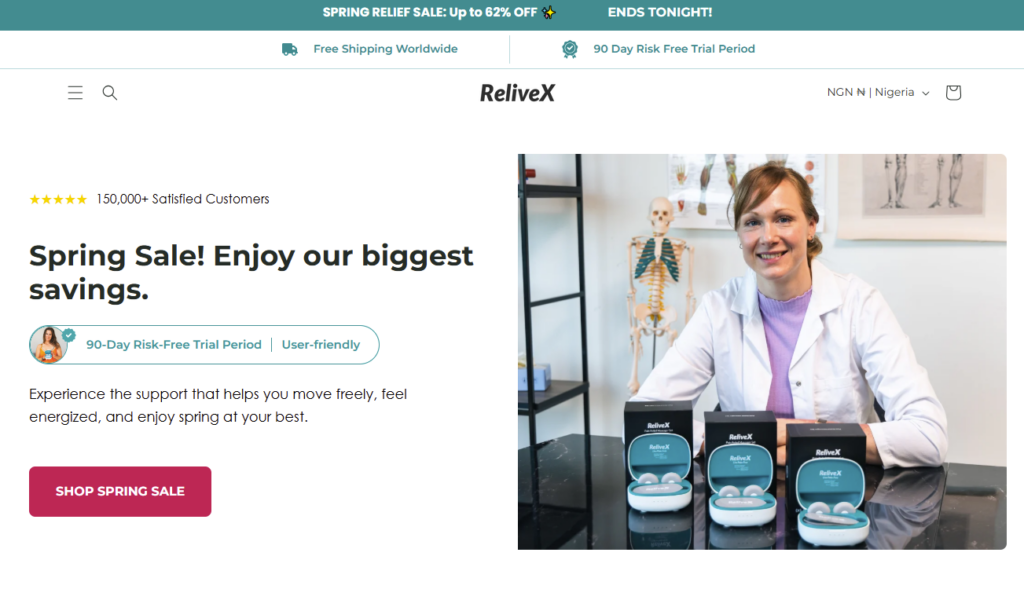
What Is ReliveX Adaptive Correction System?
The ReliveX Adaptive Correction System is a portable neuromuscular electrical stimulation device (NMES). It uses adhesive electrode pads placed on the skin to deliver low-level electrical impulses to muscles.
Its purpose is to stimulate muscle contraction and improve neuromuscular activation in targeted areas such as the lower back and core.
NMES technology itself is not new. It has been used in rehabilitation and sports medicine for decades, including post-injury muscle recovery protocols (American Physical Therapy Association, https://www.apta.org).
How the ReliveX System Works
The device sends controlled electrical pulses through electrode pads. These pulses trigger involuntary muscle contractions, mimicking natural movement patterns.
This process may help:
- activate dormant or underused muscles
- improve blood flow to affected areas
- reduce muscle stiffness
- support neuromuscular re-education
In clinical settings, similar technology is used for muscle rehabilitation after injury or surgery.
However, clinical devices are usually supervised by physiotherapists, which is a key difference.
Scientific Perspective on NMES Technology
Neuromuscular electrical stimulation is supported in medical literature for specific applications such as:
- muscle strengthening in rehabilitation
- prevention of muscle atrophy
- post-operative recovery support
A review published in the Journal of Rehabilitation Research and Development highlights NMES as effective for muscle activation when used appropriately in controlled environments.
However, it is important to clarify a critical limitation.
NMES does not repair structural spinal damage such as:
- herniated discs
- spinal degeneration
- nerve compression syndromes
These require medical diagnosis and targeted treatment.
Key Benefits of ReliveX Adaptive Correction System
1. At-home pain management support
ReliveX offers a convenient way to manage muscle discomfort without clinic visits or medication dependency.
2. Non-pharmacological approach
It provides an alternative to painkillers, which aligns with global health recommendations to reduce long-term drug overuse for chronic pain (CDC guidelines, https://www.cdc.gov).
3. Muscle activation for sedentary individuals
For people with long sitting hours, NMES may help reactivate weakened stabilizing muscles, particularly in the lower back and core.
Limitations You Should Not Ignore
1. Marketing exaggeration
Some promotional claims suggest structural correction or avoidance of surgery. These are not supported by clinical evidence.
Electrical stimulation can support muscles but does not correct anatomical spinal problems.\
2. Inconsistent user results
User feedback patterns across wellness devices like NMES systems show variability. Some report improvement, while others notice minimal change depending on:
- severity of condition
- consistency of use
- underlying medical issues
3. Lack of independent clinical trials for the product itself
While NMES is scientifically valid, ReliveX as a branded device does not appear to have extensive independent peer-reviewed trials validating all of its claims.
Who Should Consider Using ReliveX
ReliveX may be suitable for individuals who:
- experience mild to moderate muscular back pain
- work long hours in sedentary positions
- are looking for a supplementary recovery tool
- are willing to use it consistently over time
Who Should Avoid It
This device is not recommended for individuals who:
- have severe spinal or neurological conditions
- expect permanent structural correction
- require surgical or clinical intervention
- rely solely on devices without lifestyle changes
Real-World Effectiveness
The effectiveness of ReliveX depends on how it is used within a broader health strategy.
On its own, it is limited.
Combined with lifestyle correction, it becomes more useful.
Best results are observed when paired with:
- core strengthening exercises
- posture correction routines
- ergonomic workspace setup
- anti-inflammatory diet patterns
Research in musculoskeletal health consistently supports multimodal intervention over single-device dependency (National Institute of Neurological Disorders and Stroke, https://www.ninds.nih.gov).
Safety Considerations
ReliveX is generally safe when used correctly. However, users may experience:
- mild skin irritation from electrode pads
- temporary muscle fatigue
- tingling sensations at higher intensities
It should be avoided by individuals with pacemakers or certain neurological conditions unless cleared by a healthcare provider.
Frequently Asked Questions (FAQ)
Is ReliveX scientifically proven?
The underlying NMES technology is scientifically supported, but the specific product does not have extensive independent clinical validation for all marketing claims.
Can ReliveX cure back pain permanently?
No. It may help manage symptoms, but it does not cure structural spinal conditions or chronic degenerative issues.
How often should ReliveX be used?
Typically 15 to 20 minutes per session, one to two times daily depending on tolerance and manufacturer guidelines.
Is ReliveX better than physiotherapy?
No. Physiotherapy is more comprehensive and individualized. ReliveX can only serve as a supportive tool.
Is ReliveX worth the money?
It depends on expectations. It is worth considering as a supportive home therapy device, but not as a standalone treatment solution.
Final Verdict
ReliveX Adaptive Correction System sits in a familiar category of wellness tech devices that are scientifically grounded but commercially overstated.
It is not a miracle solution.
It is not a medical replacement.
It is a supportive tool for muscle activation and mild pain management.
Overall Rating: 6.5 / 10
Strategic Recommendation
If the goal is long-term back health, the most effective strategy remains:
- movement-based therapy
- posture correction
- strength conditioning
- professional physiotherapy when needed
Technology can assist recovery, but it cannot replace foundational body mechanics.
Related Scam Alerts and Review
- How to Remove Nkw-protect.pro Pop-ups
- Marsotex.com Review (2026)
- Glyco Harmony Drops Supplement Review 2026
- Dalesi_Corp PayPal Scam Review