The beauty industry loves futuristic skincare trends, and the latest product generating buzz online is the Slimrify Advanced Micro-Needle Precision Tanning Patch.
Promoted as a UV-free alternative to tanning beds and self-tanning creams, this product claims to use dissolving micro-needle technology to create a natural bronze glow without streaks, orange tones, or messy application.
Social media ads make it look revolutionary. The marketing promises a deeper tan, smoother skin, and long-lasting results with almost zero effort.
But once you strip away the viral hype, what exactly is this product, and does the science actually support the claims?
This detailed Slimrify Advanced Micro-Needle Precision Tanning Patch review covers:
- how the tanning patch works
- ingredients and technology
- customer reviews
- possible side effects
- pros and cons
- scientific concerns
- whether it is worth buying in 2026
What Is Slimrify Advanced Micro-Needle Precision Tanning Patch?
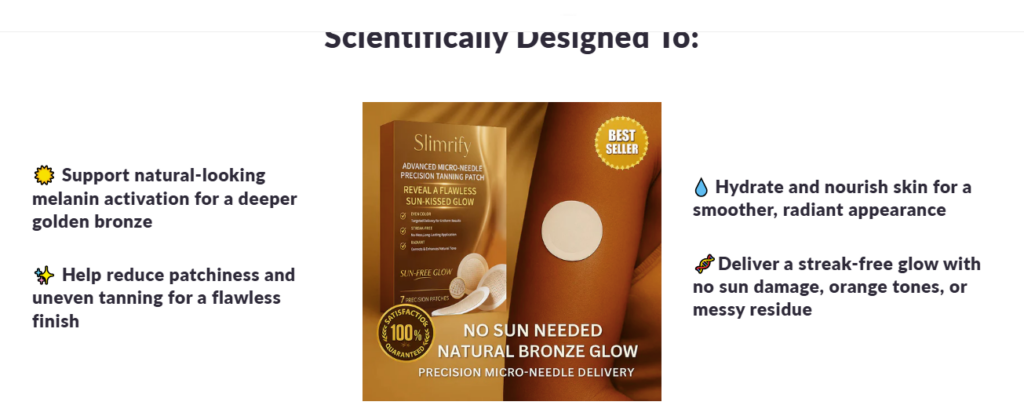
The Slimrify Official Website describes the product as a transdermal tanning patch containing more than 1,000 dissolving micro-needles infused with tanning and skincare ingredients.
The patch claims to:
- deliver tanning ingredients beneath the skin surface
- support melanin activation
- provide streak-free tanning
- reduce patchiness
- hydrate the skin
- eliminate the need for UV exposure
According to the company, the product combines skincare science with cosmetic tanning through “nano micro-needle technology.”
How Does Slimrify Tanning Patch Work?
Slimrify says the dissolving micro-needles create microscopic channels in the outer skin layer, helping active ingredients absorb more effectively than ordinary tanning lotions.
The core tanning ingredients include:
- DHA
- Erythrulose
- Peptides
- Hyaluronic Acid
- Vitamin E
Traditional self-tanners mainly work on the skin surface. DHA reacts with dead skin cells to temporarily darken the skin.
Slimrify claims its delivery system penetrates deeper and creates a more natural-looking bronze glow.
Now here’s where reality checks enter the room.
Microneedle technology itself is legitimate and used in some skincare products and medical delivery systems. But there is currently very limited independent clinical evidence proving that a tanning patch performs dramatically better than conventional self-tanning creams or sprays.
That distinction matters.
A technology can be real while the marketing surrounding it becomes wildly exaggerated.
The Science Behind DHA and Microneedle Tanning
What Is DHA?
DHA, or dihydroxyacetone, is the primary ingredient used in most self-tanners.
According to the American Academy of Dermatology, DHA reacts with amino acids in the outer skin layer to create temporary pigmentation without UV exposure.
This is why self-tanners are generally considered safer than tanning beds.
What About Microneedle Technology?
Microneedle patches already exist in skincare. Some are used for:
- acne treatment
- under-eye hydration
- wrinkle care
- ingredient absorption
Online skincare communities confirm that dissolving micro-cone patches are real products, although expectations should stay realistic.
However, tanning through a tiny patch introduces new questions:
- can enough DHA absorb through a patch to visibly tan large areas?
- does deeper delivery improve tanning quality?
- are the before-and-after images realistic?
Those answers remain unclear because publicly available clinical studies on tanning micro-needle patches are limited.
Slimrify Tanning Patch Ingredients
DHA (Dihydroxyacetone)
The main self-tanning ingredient responsible for creating temporary bronzing.
Erythrulose
Often paired with DHA for a more gradual and natural-looking tan.
Hyaluronic Acid
Supports skin hydration and may reduce dryness associated with tanning products.
Vitamin E
An antioxidant that may help protect and moisturize the skin.
Peptides
Commonly used in skincare for skin conditioning and anti-aging support.
Slimrify Advanced Micro-Needle Precision Tanning Patch Benefits
UV-Free Tanning
The product avoids direct UV exposure from tanning beds or excessive sunbathing.
Cleaner Application
Unlike lotions and mousses, patches reduce the risk of stained hands, bedsheets, or clothes.
Portable and Travel Friendly
The compact patch design makes it easy to carry during travel.
Hydrating Formula
Hyaluronic acid and vitamin E may help prevent dryness.
Innovative Beauty Technology
The product appeals to users interested in futuristic skincare and cosmetic delivery systems.
Potential Downsides and Concerns
Limited Independent Reviews
Most positive testimonials appear directly on the Slimrify website.
Independent dermatologist reviews and clinical testing are difficult to find.
Viral Marketing Raises Questions
The advertising style includes:
- countdown timers
- “low stock” alerts
- dramatic transformations
- AI-looking before-and-after images
This type of marketing often appears in highly promoted viral beauty products.
Reddit Users Are Highly Skeptical
On Reddit, many users questioned the science behind tanning patches.
One commenter wrote:
“The science behind it is not convincing.”
Another user stated:
“DHA is topical.”
Several users also criticized the promotional images as unrealistic or AI-enhanced.
Skin Sensitivity Risks
Even dissolving micro-needles can irritate sensitive skin.
Possible side effects may include:
- redness
- itching
- mild swelling
- irritation
- tenderness
Some microneedling users online also describe temporary sunburn-like sensations after treatment.
Real Customer Reviews and Online Feedback
The company website features thousands of positive reviews describing:
- natural glow
- easy application
- no streaking
- gradual tanning results
However, independent community feedback is far more mixed.
Some skincare enthusiasts believe microneedle patches can improve ingredient absorption generally. Others argue the tanning claims sound scientifically weak.
The overall consensus online seems to be:
- the technology itself is plausible
- the dramatic tanning claims remain questionable
Is Slimrify Tanning Patch Safe?
For healthy adults, the listed ingredients appear similar to many standard self-tanning products.
Still, users should:
- patch-test before full use
- avoid broken or irritated skin
- discontinue use if reactions occur
- consult a dermatologist if they have eczema or severe skin sensitivity
The Cleveland Clinic Self-Tanner Guide notes that self-tanners are generally safer than UV tanning when used properly.
Who Should Consider Buying It?
This product may appeal to:
- people who hate messy tanning creams
- beauty-tech enthusiasts
- travelers
- users wanting gradual UV-free tanning
- skincare experimenters
However, people expecting dramatic overnight bronzing may be disappointed.
Final Verdict. Is Slimrify Advanced Micro-Needle Precision Tanning Patch Worth It?
The Slimrify Advanced Micro-Needle Precision Tanning Patch sits somewhere between skincare innovation and internet marketing hype.
The microneedle concept itself is legitimate. Dissolving cosmetic micro-cones already exist in skincare products.
But the tanning claims currently rely far more on marketing than strong independent scientific proof.
Could it provide subtle gradual tanning benefits for some users? Possibly.
Does current evidence support the dramatic social media transformations shown in ads? Not convincingly.
At this stage, Slimrify feels more like an experimental beauty trend than a fully proven skincare breakthrough.
Consumers should approach the product with realistic expectations and healthy skepticism.
Frequently Asked Questions
Does Slimrify Advanced Micro-Needle Precision Tanning Patch really work?
Some users report gradual tanning effects, but independent clinical evidence supporting dramatic results remains limited.
Is Slimrify tanning patch safe?
For most healthy adults, the ingredients appear comparable to regular self-tanning products. Sensitive skin users should patch-test first.
How long does the Slimrify tan last?
The company claims results develop gradually and may last days or weeks depending on skin type and maintenance.
Does the patch contain real needles?
No. The product uses dissolving micro-cones rather than traditional metal needles.
Can Slimrify replace tanning lotion?
Possibly for convenience-focused users, although traditional self-tanners currently have stronger clinical history and customer trust.
Is Slimrify FDA approved?
Publicly verifiable FDA approval specifically for tanning claims is unclear based on available information.
Does the Slimrify patch stain clothes?
The patch format may reduce staining compared to creams and sprays because the ingredients are contained within the patch system.
Can sensitive skin users use Slimrify?
Possibly, but people with eczema, allergies, or reactive skin should consult a dermatologist first.