
Tinnitus is a persistent condition described as ringing, buzzing, or hissing in the ears. Because there is no universal cure, many people look for natural supplements that promise relief.
One of the most heavily advertised products in this space is Sonus Zen. It is promoted as a natural tinnitus support formula that claims to reduce ear noise and improve hearing clarity.
However, a closer look reveals mixed information, marketing exaggeration, and limited scientific backing.
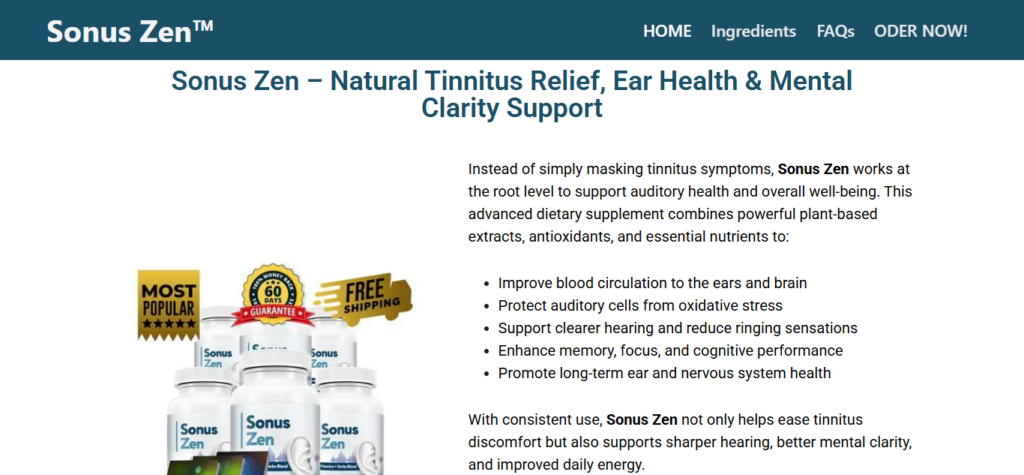
What Is Sonus Zen?
Sonus Zen is marketed as a dietary supplement designed to support auditory health and reduce tinnitus symptoms.
According to promotional material, it typically includes plant-based ingredients such as:
- Ginkgo Biloba
- Bilberry extract
- B vitamins (B6 and B12)
- Green tea extract
- Cinnamon extract
- Lutein and Zeaxanthin
Some versions of the formula also claim to support brain function, circulation, and nerve health.
Source: Official-style ingredient listing and marketing pages
How Sonus Zen Claims to Work
The product is advertised to work by:
- Improving blood flow to the inner ear
- Reducing inflammation in auditory nerves
- Supporting brain-ear communication
- Lowering oxidative stress in nerve cells
These explanations are common in supplement marketing, but they are not backed by strong clinical trials specifically for Sonus Zen.
Does Sonus Zen Really Work?
Based on independent reviews and available research:
- There is no clinical proof that Sonus Zen cures or permanently treats tinnitus
- Ingredient-level research does not guarantee product effectiveness
- Results, if any, are inconsistent across users
Some individuals report mild improvements, but these may be due to placebo effects or natural fluctuation in tinnitus symptoms.
Expert-based summaries confirm that supplements like this are not medically proven treatments for tinnitus
Scientific and Medical Perspective
Medical professionals generally agree that tinnitus is complex and cannot be reliably cured with supplements.
Standard approaches include:
- Sound therapy
- Hearing aids (for hearing-related tinnitus)
- Cognitive behavioral therapy (CBT)
- Treating underlying ear or neurological conditions
There is currently no approved supplement that cures tinnitus, according to tinnitus research organizations and clinical guidance.
Red Flags and Concerns
Several concerns are repeatedly highlighted in independent reviews:
1. Overstated Marketing Claims
Some ads claim “permanent tinnitus relief” or “complete silence restoration,” which is not scientifically supported.
2. Lack of Independent Clinical Trials
There are no widely recognized peer-reviewed studies proving the effectiveness of Sonus Zen as a complete product.
3. Emotional Advertising Tactics
Marketing often uses emotional storytelling and dramatic “before and after” claims.
4. Mixed or Unverified Testimonials
Some positive reviews appear on promotional pages, but independent user experiences vary widely.
Real User Feedback Summary
Across different review platforms, feedback tends to fall into three categories:
Positive (minor group):
- Slight reduction in noise perception
- Better sleep or relaxation
Neutral:
- No noticeable change but continued use
- Mild placebo-like effect
Negative (common):
- No improvement at all
- Disappointment after purchase
- Expectations not met
Overall, results are inconsistent and not medically verified.
Safety and Transparency
While Sonus Zen is often described as “natural,” safety concerns include:
- Lack of full regulatory approval as a medical treatment
- Limited long-term safety studies
- Possible interactions with medications (depending on ingredients like Ginkgo Biloba)
Anyone considering such supplements should consult a healthcare professional first.
Final Verdict
The Sonus Zen Tinnitus Supplement Review 2026 shows that:
- It is heavily marketed as a tinnitus solution
- It has no strong scientific proof of effectiveness
- Results are inconsistent and not guaranteed
- It should not replace medical treatment or professional advice
Conclusion:
Sonus Zen is best viewed as a commercial supplement with unproven tinnitus claims, rather than a clinically validated treatment.
Frequently Asked Questions (FAQ)
Is Sonus Zen a scam?
It is not officially classified as a scam, but it has several marketing red flags and lacks scientific validation.
Can Sonus Zen cure tinnitus?
No credible evidence shows that it can cure tinnitus or permanently stop ear ringing.
How long does it take to work?
Some claims suggest weeks, but there is no verified clinical timeline.
Is Sonus Zen safe?
Generally marketed as natural, but safety depends on individual health conditions and ingredient sensitivity.
Related Scam Alerts and Review
- Tryrenuyou.com Review
- Lissiy.com Review
- Okcvapors.com Review
- Nevea Lymphatic Drainage Drops Review
- Prosta Defend Supplement Review
- NuraSlim Detox Tea Review
- Appreclude.com Review
