When heating your home efficiently without overspending is a top priority, the idea of a compact plug‑in heater like the Qinux ClimaHeat Pro becomes attractive. But does it deliver on its promises? In this in‑depth review we examine its claims, actual performance, safety and buying advice.
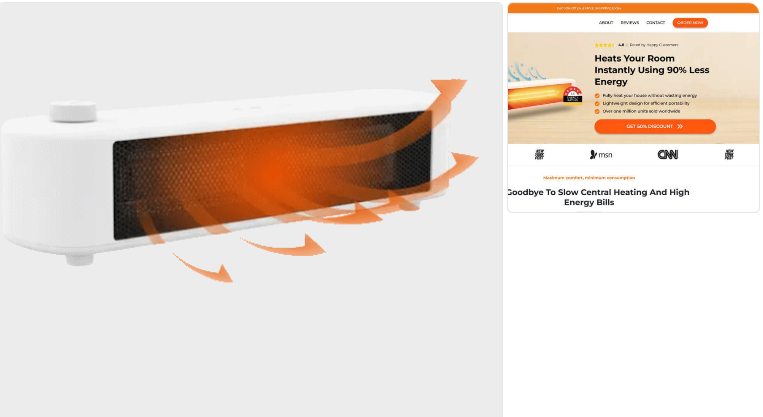
What is the Qinux ClimaHeat Pro Heater?
The Qinux ClimaHeat Pro is marketed as a small electric plug‑in heater that can:
- Warm a room quickly and effectively
- Reduce energy bills significantly (claims of “up to 60% or more” savings)
- Serve as an alternative to larger heating systems
If true, that could be compelling. But as we’ll see, there are caveats.
Performance Review
Heating Efficiency
Independent analysis indicates that the ClimaHeat Pro is not capable of heating a full room as many of its adverts suggest. Reviews point out it works best for close‑range personal heating rather than full‑space.
It uses an approximate 500–800 W output (according to user reports) which limits its effective range.
Energy Savings
While lower wattage counts may look good on a spec sheet, the trade‑off is less heat output. The claim of substantial energy savings should be taken with caution: using less power is fine, but if it doesn’t sufficiently warm your space, the savings may not matter.
Build Quality & Safety
The product appears to be a re‑branded generic heater (often sourced from China) sold via aggressive online marketing.
Crucially, many users could not verify strong third‑party safety certifications like UL, ETL or CSA.
Certifications matter because they ensure that the appliance has been tested for risks like tipping, overheating, and electrical faults.
Marketing & Buying Concerns
- The sales pages for the ClimaHeat Pro use urgency tactics (“limited stock!”, “today only”), celebrity endorsements, and bold claims of “whole‑room” heating and major savings.
- Reports of hard‑to‑reach customer support, delays, and unclear return/warranty policies are common.
- For buyers in Nigeria (or other international markets): consider voltage compatibility, plug type, after‑sales service, warranty, and shipping/import duties.
Pros and Cons
Pros:
- Compact, easy to move and ostensibly cheap compared to large heaters
- Lower power draw than some high‑wattage heaters (in theory)
- Suitable for very small spaces or personal use
Cons:
- Not likely to heat a full room effectively
- Marketing claims appear exaggerated
- Safety certification may be weak or unclear
- After‑sales service/support may be minimal
- Imported versions may require local adapter/voltage conversion
Safety & Usage Tips
What to check before buying
- Check for safety certification marks — look for labels like UL (Underwriters Laboratories), ETL, CSA. These signify third‑party testing. Consumer Reports+2Tempco+2
- Ensure built‑in safety features — tip‑over switch, overheat shut‑off, possibly a GFCI plug if used near moisture. Fire Systems, Inc.+1
- Match heater size to room size — small heaters are best for small, enclosed spaces with good insulation.
- Check local compatibility — voltage (e.g., Nigeria uses 230 V/50 Hz), plug type, and whether warranty/support covers your region.
- Read independent reviews — user experience matters more than marketing claims.
Safe usage practices
- Place the heater on a hard, level, non‑flammable surface, not on carpet or soft furniture. Consumer Reports+1
- Maintain at least three feet (≈1 m) of clearance from curtains, bedding, furniture, or other flammable items. Good Housekeeping+1
- Plug the heater directly into a wall outlet, don’t use extension cords or power strips. WIRED+1
- Always turn off/unplug when leaving the room or going to bed.
- Inspect the cord regularly — no fraying, melting, or damage. If damaged, stop using it. Safe Electricity
- Keep away from children, pets, and moisture (e.g., bathrooms). Consumer Reports
What to Do If You’re Scammed
If you purchase the ClimaHeat Pro (or any similar product) and suspect you’ve been scammed, here’s what you should do:
- Contact your payment provider — if you used a credit card, PayPal, or similar, file a dispute or chargeback.
- Report to consumer protection authorities — for example in Nigeria, reach out to the Consumer Protection Council (Nigeria) (CPC) or equivalent regulatory body.
- Document everything — keep screenshots of the sales page, emails, receipt, chat logs, and any product failures.
- Warn others — post reviews on online forums, consumer complaint sites, or social media to prevent others from falling for the same issue.
- Avoid extra payments — scammers often request “just pay a small fee to release the shipping” or etc. Don’t comply unless you are sure of legitimacy.
- Check for local repair/return channels — if none exist, that is a red‑flag.
Frequently Asked Questions (FAQs)
Q1. Can the ClimaHeat Pro heat a large room?
No — based on user reports and spec analysis, it is more suited for personal or very small space heating rather than a large room.
Q2. Is it energy efficient?
It consumes less electricity than many high‑wattage heaters, but the trade‑off is reduced performance. Efficiency only matters if the output meets your needs.
Q3. Is it safe for use in Nigeria?
Only if it meets local voltage/plug standards, has valid safety certifications, and you understand the return/warranty process. Imported units may have extra risks.
Q4. Where can I buy it?
Mostly via online marketplaces and direct sales pages. Be cautious — ensure you verify seller credibility, local shipping, warranty, and certification.
Q5. What alternative should I consider?
Consider heating solutions from reputable brands with verified reviews and full local support. Check out buyer‑guides like the one on Tom’s Guide for the “best space heaters of 2025”. Tom’s Guide
Final Verdict
The Qinux ClimaHeat Pro Heater may serve as a compact, affordable personal heater for very small spaces, but it does not live up to claims of whole‑room heating or dramatic energy savings. If you’re considering it:
- Set realistic expectations (personal space, not large room)
- Verify safety certifications and compatibility
- Be mindful of seller credibility and after‑sales support
- Consider alternatives from reputable brands
For those who require reliable, full‑room heating with verified performance and safety, it may be wiser to invest a bit more in a well‑rated model.
Related Scam Alerts
- Gluco Force Drops Review – Real or Fake?
- Qinux Heatfy Heater Review
- Reka Fitness Treadmill Review
- GLP-1 Patches Scam – Legit Weight Loss or Fake Ads?
- Luna Heater Reviews – Real Winter Gadget or Scam Offer?
- Gluco Control Scam Ads Exposed
- Gloritouch.com Review
- MineOne Pro Bitcoin Miner Review – Investment or Trap?
- At Home Store Closing Sale Scam – How Fake Discounts Trick You
- ProZenith Scam – Is the “Japanese Salt Trick” Weight Loss Supplement Legit or Fraud?