MindBoost Supplement contains ingredients that have been individually studied for cognitive support. However, there is no strong scientific evidence proving that MindBoost itself consistently improves memory, focus, or brain performance.
While some users may experience mild benefits, results vary significantly. Consumers should approach MindBoost with caution, verify ingredient transparency, and consult healthcare professionals before use.
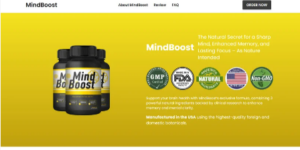
What Is MindBoost Supplement?
MindBoost Supplement is a dietary product promoted as a brain health support formula. According to its marketing materials, MindBoost is designed to help support:
- Memory and recall
- Focus and concentration
- Mental clarity and alertness
- Overall cognitive performance
MindBoost is typically sold online through promotional websites rather than physical pharmacies, which is common for supplements in the cognitive enhancement niche.
How Dietary Supplements Like MindBoost Are Regulated
It is important to understand that dietary supplements are not approved by the U.S. Food and Drug Administration (FDA) before being sold. Manufacturers are responsible for ensuring product safety, but they do not need to prove effectiveness through clinical trials before marketing their products.
The FDA explains that supplements may only make general “structure and function” claims, such as “supports brain health,” and cannot legally claim to treat or cure diseases like Alzheimer’s or ADHD.
You can learn more about supplement regulation here:
U.S. Food and Drug Administration – Dietary Supplements
https://www.fda.gov/food/dietary-supplements
This means MindBoost’s claims should be evaluated carefully and not interpreted as medical guarantees.
MindBoost Supplement Ingredients Overview
While ingredient formulations may vary, MindBoost is commonly promoted as containing a blend of natural compounds associated with cognitive support. Below are ingredients often found in supplements like MindBoost and what scientific research suggests about them.
Bacopa Monnieri
Bacopa Monnieri is a traditional herb used in Ayurvedic medicine. Some studies indicate that long-term use may support memory and cognitive processing in healthy adults.
NIH Office of Dietary Supplements – Bacopa Monnieri
https://ods.od.nih.gov/factsheets/BacopaMonnieri-Consumer/
Ginkgo Biloba
Ginkgo Biloba has been widely studied for its potential effects on blood flow and cognitive function. Research results are mixed, with some studies showing modest benefits and others finding limited effects.
National Center for Complementary and Integrative Health – Ginkgo
https://www.nccih.nih.gov/health/ginkgo
Phosphatidylserine
Phosphatidylserine is a phospholipid found in brain cell membranes. Some research suggests it may support memory and cognitive function, particularly in aging populations.
PubMed – Phosphatidylserine and Cognitive Function
https://pubmed.ncbi.nlm.nih.gov/10997526/
L-Theanine and Caffeine (If Included)
L-theanine, often paired with caffeine, may promote alertness and focus while reducing jittery side effects. Some studies show improved attention and reaction time with this combination.
NIH – L-Theanine Research
https://pubmed.ncbi.nlm.nih.gov/25478048/
Is There Scientific Proof That MindBoost Works?
At this time, there are no publicly available clinical trials that test MindBoost Supplement as a finished product. Most of the evidence cited in promotional content relies on studies of individual ingredients rather than the formula itself.
The National Institutes of Health (NIH) cautions that many brain supplements rely on limited or inconsistent evidence and that results vary widely among individuals.
NIH – Herbs and Supplements Overview
https://ods.od.nih.gov/HealthInformation/HerbsAtAGlance.aspx
Because of this, consumers should approach MindBoost with realistic expectations.
MindBoost Supplement Customer Reviews and Complaints
Independent customer reviews are a key factor in evaluating supplement credibility. However, MindBoost has limited verified reviews on trusted third-party platforms such as Trustpilot, Reddit, or major retail marketplaces.
Based on general trends seen with similar cognitive supplements, user feedback often includes:
- Mild improvements in focus or alertness
- No noticeable effects for some users
- Results that depend on lifestyle, diet, and consistency
Consumers should be cautious of testimonials found only on official sales pages, as these are typically curated for marketing purposes.
For guidance on evaluating supplement claims and reviews, see:
Consumer Reports – Dietary Supplement Claims
https://www.consumerreports.org/dietary-supplements/how-to-evaluate-supplement-claims/
Safety, Side Effects, and Warnings
Although MindBoost is marketed as a natural supplement, natural ingredients can still cause side effects or interact with medications.
Possible side effects reported with cognitive supplements may include:
- Headaches
- Digestive upset
- Sleep disturbances
- Increased heart rate or nervousness (if stimulants are present)
The FDA recommends consulting a healthcare professional before starting any supplement, especially for individuals who:
- Take prescription medications
- Have medical conditions
- Are pregnant or breastfeeding
FDA – MedWatch Adverse Event Reporting
https://www.fda.gov/safety/medwatch-fda-safety-information-and-adverse-event-reporting-program
Pros and Cons of MindBoost Supplement
Potential Advantages
- Contains ingredients commonly associated with cognitive support
- Easy daily supplement format
- May support focus and clarity for some users
Potential Drawbacks
- No clinical trials on the complete formula
- Limited independent customer reviews
- Results are not guaranteed
- Not intended to treat or cure cognitive disorders
Better Alternatives to Supplements for Brain Health
Experts agree that supplements should not replace healthy lifestyle habits. According to the Centers for Disease Control and Prevention (CDC), brain health is strongly influenced by:
- Quality sleep
- Balanced nutrition
- Regular physical activity
- Mental stimulation
- Stress management
CDC – Healthy Brain Initiative
https://www.cdc.gov/aging/healthybrain/index.htm
Supplements like MindBoost may play a supportive role but should not be relied upon as a standalone solution.
Final Verdict: Is MindBoost Supplement Worth Trying?
MindBoost Supplement contains ingredients that have been individually studied for cognitive support. However, there is no strong scientific evidence proving that MindBoost itself consistently improves memory, focus, or brain performance.
While some users may experience mild benefits, results vary significantly. Consumers should approach MindBoost with caution, verify ingredient transparency, and consult healthcare professionals before use.
MindBoost may be suitable for individuals seeking general cognitive support, but it should not be viewed as a miracle solution for memory loss or mental decline.
Read our complete product reviews here to know more about scam products.