
As temperatures drop, many people search for affordable ways to stay warm without skyrocketing energy bills. That’s where the Qinux Heatfy Heater has grabbed attention. Advertised as a revolutionary mini heater that can “heat any room in seconds” while saving electricity, it’s being promoted across social media and online ads.
But is this heater really as effective as the sellers claim? Or is it another misleading gadget designed to take advantage of desperate winter shoppers?
In this detailed Qinux Heatfy Heater review, we’ll uncover everything — the claims, the facts, real user experiences, and what you should do to stay safe from potential online scams.
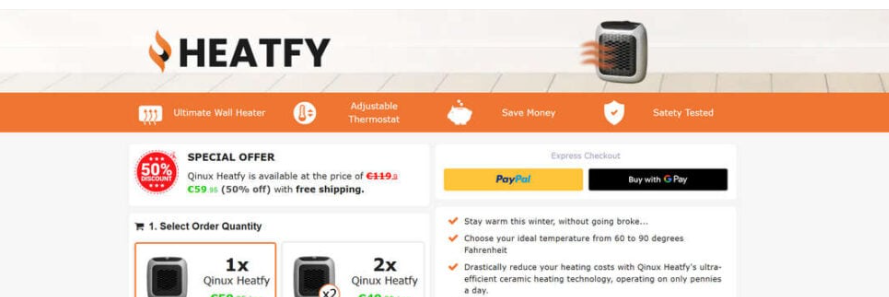
What Is the Qinux Heatfy Heater?
The Qinux Heatfy Heater is promoted as a portable plug-in ceramic heater that uses advanced heating technology to deliver fast warmth. The marketing promises a combination of efficiency, safety, and convenience.
Here’s what sellers claim the product can do:
- Heat up a room in just a few minutes.
- Use energy-efficient ceramic technology to lower electricity usage.
- Feature safety measures like tip-over and overheat protection.
- Work with smart home devices such as Alexa or Google Assistant (on some models).
- Operate quietly and safely in bedrooms, offices, or dorms.
You’ll often see these claims on websites offering “50% off today only” promotions, countdown timers, and dozens of 5-star reviews that can’t be verified.
Sources: MalwareTips, ScamTok
What Independent Reviews Reveal
While the Qinux Heatfy Heater is a real product, independent investigations show that its marketing is highly exaggerated. Let’s break down the facts:
1. Overhyped Claims
The heater can provide localized warmth but cannot heat an entire room as advertised. Its wattage (usually between 400–800W) limits its heating capacity. Statements about cutting energy bills or heating large spaces are misleading.
2. Generic Rebranding
Experts have noted that the Qinux Heatfy Heater closely resembles other rebranded plug-in heaters like “EcoHeat S,” “HotixPro,” and “AmperHeat.” These are often generic Chinese-manufactured products with the same design, renamed and resold under different brands.
3. Lack of Transparency
The official website provides little to no information about the company, manufacturer, or after-sales support. Many buyers report having trouble reaching customer service or returning defective products.
4. Mixed User Feedback
Some users say it provides mild heat for personal use in small spaces (like near your desk), while others complain it barely makes a difference. Delivery delays and refund issues are also common complaints.
Sources: MalwareTips, ScamTok
Is the Qinux Heatfy Heater Legit or a Scam?
The Qinux Heatfy Heater is not an outright scam — you’ll likely receive a product — but it’s heavily overhyped and overpriced. It does not perform anywhere near the dramatic results shown in the advertisements.
If you’re looking for genuine performance, you’re better off purchasing from well-established brands like:
These companies provide clear warranty details, customer support, and safety certifications, unlike the Qinux brand’s vague web presence.
Why Products Like Qinux Heatfy Go Viral
Scam-style heaters often go viral because they rely on emotional marketing — tapping into fear and urgency. Ads typically use:
- Fake “limited-time” discounts
- Countdown timers that reset daily
- Stock images of fake reviewers
- Claims of “huge energy savings” or “NASA-inspired technology”
This is a recurring tactic seen in numerous online scams. If you’ve read our analyses of similar scams like ProZenith Scam and At Home Store Closing Sale Scam, you’ll recognize the same pattern.
How to Spot Fake or Misleading Heater Ads
- Over-the-top promises – If a product claims to “replace your heating system” for under $100, it’s likely exaggerated.
- Lack of company transparency – No verified address, phone number, or return policy.
- Copied website layout – Identical designs and text across multiple domains.
- Fake reviews – Testimonials without verified buyers or real photos.
- Urgent offers – “Limited stock,” “ends tonight,” or “80% off” banners to rush you into buying.
Learn more from official safety resources:
Tips to Stay Safe When Shopping Online
- Buy from trusted retailers. Stick to well-known platforms like Amazon, Walmart, or Best Buy.
- Avoid social media ads. Scammers frequently use Facebook or TikTok ads to sell fake products.
- Check website authenticity. Look for HTTPS encryption and verified contact details.
- Read independent reviews. Don’t rely solely on the product website’s testimonials.
- Use secure payment methods. Avoid wire transfers or debit cards. Credit cards offer protection through chargebacks.
- Compare prices. If a deal seems too good to be true, it probably is.
For similar tips, check our article on How to Identify Online Shopping Scams.
What To Do If You’ve Been Scammed
If you’ve already purchased the Qinux Heatfy Heater from a suspicious website and believe you’ve been scammed, act quickly.
Step 1: Contact Your Bank or Payment Provider
Request a chargeback or dispute the payment immediately. Explain that the seller misrepresented the product or failed to deliver as promised.
Step 2: Report the Fraud
- U.S. buyers: Report at FTC Fraud Reporting
- UK buyers: Visit Action Fraud
- Nigerian buyers: File a report with EFCC or NCC Consumer Portal
Step 3: Protect Your Information
If you created an account on the scam site, change your passwords and monitor your bank account for unauthorized charges.
Step 4: Warn Others
Post your experience on trusted forums, social media, or scam awareness platforms to help others avoid falling for the same trick.
Frequently Asked Questions (FAQ)
1. Is the Qinux Heatfy Heater legitimate?
It’s a real device, but its marketing exaggerates performance. It only warms small spaces.
2. Does it save electricity?
Not significantly. All plug-in heaters use roughly the same power. Claims of “50% energy savings” are false.
3. Where is it made?
Most Qinux products are manufactured in China and rebranded for international sale.
4. Can it heat a whole room?
No. Its wattage is too low to heat large rooms effectively.
5. Can I get a refund?
Refunds depend on where you purchased it. Official Qinux sites are known for poor customer service and refund delays.
6. What are better alternatives?
Choose reliable brands like Honeywell, De’Longhi, or Lasko — all of which are safety-certified and have transparent customer support.
7. How do I avoid heater scams?
Check company authenticity, product reviews, and safety certifications before buying. Avoid impulsive purchases from new or unverified websites.
8. Is the Qinux Heater available in Nigeria?
While some local resellers might list it, proceed cautiously. Verify the store’s authenticity and payment security before buying.
Final Verdict: Should You Buy the Qinux Heatfy Heater?
The Qinux Heatfy Heater is not worth the hype. It can work for small personal spaces, but it does not deliver on its grand promises of instant room-wide heat or energy savings. Between the vague seller information, rebranding issues, and inconsistent customer support, it’s best to avoid this product.
Instead, invest in heaters from well-known, safety-certified brands. Check trusted marketplaces like:
- Amazon – Portable Ceramic Heaters
- Walmart – Electric Room Heaters
- Best Buy – Energy Efficient Heaters
Related Scam Alerts
- Gluco Force Drops Review – Real or Fake?
- Reka Fitness Treadmill Review
- GLP-1 Patches Scam – Legit Weight Loss or Fake Ads?
- Luna Heater Reviews – Real Winter Gadget or Scam Offer?
- Gluco Control Scam Ads Exposed
- Gloritouch.com Review
- MineOne Pro Bitcoin Miner Review – Investment or Trap?
- At Home Store Closing Sale Scam – How Fake Discounts Trick You
- ProZenith Scam – Is the “Japanese Salt Trick” Weight Loss Supplement Legit or Fraud?
