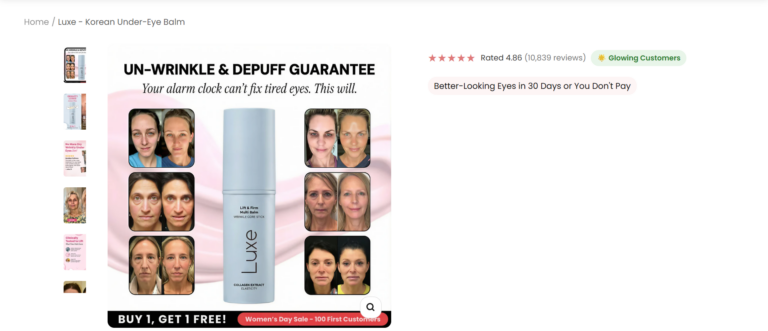
With thousands of supplements, vitamins, herbal products, wellness products, and other health products available online, knowing how to check if a health product is legitimate is an important part of making an informed purchase.
A product may have an attractive website, professional packaging, positive testimonials, or impressive advertising. However, these things alone do not establish whether the product is genuine, appropriately labeled, or supported by reliable evidence.
Before buying a health product online, it is worth checking the manufacturer, ingredients, labeling, health claims, regulatory information, reviews, and payment terms.
In this guide, we explain how to verify a health product and the important things consumers should consider before making a purchase.
What Does It Mean for a Health Product to Be Legitimate?
A legitimate health product should provide enough information for consumers to understand what they are purchasing and who is responsible for manufacturing or distributing it.
Depending on the product and country, relevant information may include:
- Product name
- Ingredient list
- Manufacturer or distributor
- Contact information
- Directions for use
- Warnings and precautions
- Product quantity
- Batch or lot information where applicable
- Expiration or best-before information where applicable
However, a professional-looking label or website should not be considered proof of effectiveness or safety on its own.
How to Check If a Health Product Is Legitimate
1. Check the Manufacturer
Start by identifying the company that manufactures or distributes the product.
Look for:
- Company name
- Manufacturer information
- Business address
- Customer-service details
- Contact information
- Official website
If it is difficult to determine who is actually responsible for a product, take additional time to research it before purchasing.
You can also search for the company independently instead of relying exclusively on information published on the product’s sales page.
2. Check the Product Label
Carefully read the product label before buying or using a health product.
Depending on the type of product, check for:
- Complete ingredient list
- Serving size
- Recommended use
- Product quantity
- Manufacturer or distributor
- Warnings and precautions
- Storage instructions
- Allergen information where applicable
- Batch or lot information where applicable
- Expiration or best-before information where applicable
Missing or unclear information does not automatically prove that a product is illegitimate, but it is a reason to investigate further.
3. Verify Regulatory Information
Regulatory requirements vary depending on the product and the country where it is sold.
For consumers in Nigeria, NAFDAC provides online tools for checking registered products.
You can search the NAFDAC Greenbook registered product database to look for product information such as product name, active ingredients, registration number, applicant, approval date, and status.
NAFDAC also provides a product verification portal where users can enter a NAFDAC number to verify relevant product information.
For consumers in other countries, check the relevant national regulatory authority.
Important: The presence of a registration or identification number should not automatically be interpreted as proof that every marketing claim made about a product has been independently established.
4. Research the Ingredients
If you are checking a supplement, look beyond the product’s advertising.
Research the individual ingredients and consider:
- What the ingredient is
- Its intended use
- Available scientific evidence
- Possible side effects
- Potential interactions
- The amount contained in the product
The NIH Office of Dietary Supplements provides fact sheets covering many vitamins, minerals, herbs, botanicals, and other dietary supplements.
The NCCIH guide to dietary and herbal supplements also provides information about supplement safety, evidence, and potential interactions.
5. Examine the Health Claims
One of the most important parts of health product verification is looking carefully at what the product claims to do.
Be cautious about advertising that promises:
- Guaranteed health results
- Instant results
- A “miracle cure”
- Permanent reversal of a health condition
- Treatment of multiple unrelated conditions
- Results for everyone
- Replacement of prescribed medical treatment
This does not mean that every product making a strong claim is necessarily illegitimate. Instead, such claims should encourage you to look for reliable evidence before making a purchase.
6. Search for Independent Health Product Reviews
Searching for health product reviews can provide useful information about consumers’ experiences.
You can search for:
- “[Product name] reviews”
- “[Product name] complaints”
- “[Product name] ingredients”
- “[Product name] refund”
- “[Product name] subscription”
- “[Product name] customer service”
However, reviews should be interpreted carefully.
A positive testimonial describes an individual’s experience. It does not necessarily establish that a product has been scientifically proven to work.
Likewise, a negative review describes an individual’s experience and should be considered alongside other available information.
7. Check for Subscription or Recurring Charges
Before buying a health product online, carefully review the checkout page.
Look for:
- Automatic renewals
- Monthly subscriptions
- Recurring charges
- Membership fees
- Shipping charges
- Multi-product offers
- Cancellation requirements
An introductory price may not always represent the total cost of an ongoing subscription.
Understanding the purchase terms before entering payment information can help prevent unexpected charges.
8. Verify Doctor or Celebrity Endorsements
Some health-product advertisements feature celebrities, doctors, researchers, or organizations.
Don’t assume that a photograph or quotation means the person officially endorses the product.
If an advertisement claims that a particular healthcare professional or organization recommends a product, look for confirmation through an independent official source.
9. Examine the Seller’s Website
A professional-looking website can provide useful information, but website design alone does not establish that a health product is legitimate.
Look for:
- Company information
- Contact details
- Privacy policy
- Terms and conditions
- Refund policy
- Shipping information
- Product information
- Transparent pricing
Also check whether the company information is consistent throughout the website.
10. Compare the Price
Price alone cannot determine whether a health product is legitimate.
However, if a product is being offered at an unusually low price, it may be worth investigating the seller, product source, quantity, and purchase terms before ordering.
Where possible, compare the product across multiple established retailers or authorized sellers.
Health Product Scam Warning Signs
There is no single warning sign that automatically proves a product is fraudulent.
However, the following issues deserve additional investigation:
| Warning sign | What to investigate |
|---|---|
| Guaranteed results | Look for evidence supporting the claim |
| “Miracle cure” language | Check whether the claim is realistic |
| Extremely fast results | Research the advertised timeframe |
| Missing manufacturer information | Find out who is responsible for the product |
| Vague ingredient information | Look for a complete ingredient list |
| Hidden subscription terms | Check for recurring payments |
| Questionable endorsements | Verify the claimed endorsement |
| Pressure to purchase | Take time to research the product |
| Only positive testimonials | Look for independent information |
| Unclear refund policy | Understand the purchase conditions |
These are warning signs to investigate, rather than automatic proof that a particular product is fraudulent.
How to Verify a Supplement Before Buying
If you are searching for how to check if a supplement is legitimate, use this simple process:
Step 1: Identify the manufacturer
Find the company responsible for manufacturing or distributing the supplement.
Step 2: Read the label
Check the ingredients, serving information, directions, warnings, and other relevant details.
Step 3: Research the ingredients
Use reliable health information sources to learn about the ingredients and their potential safety considerations.
Step 4: Examine the claims
Determine whether the advertised benefits are supported by credible evidence.
Step 5: Check regulatory information
Where applicable, verify the product through the relevant regulatory authority.
Step 6: Research the seller
Look for independent information about the company and its customer-service practices.
Step 7: Check the payment terms
Make sure you understand the total price, shipping costs, subscriptions, recurring payments, and cancellation requirements.
Are Online Health Product Reviews Reliable?
Online reviews can be helpful, but they should not be the only source used to evaluate a health product.
Reviews may provide information about:
- Shipping
- Packaging
- Customer service
- Refund experiences
- Ordering problems
- General customer experiences
However, individual reviews generally cannot establish whether a health product is medically effective or appropriate for everyone.
For information about dietary supplements, the NIH Office of Dietary Supplements provides evidence-based resources covering supplement ingredients, safety, interactions, and other relevant topics.
Does “Natural” Mean a Health Product Is Safe?
No.
The word “natural” does not automatically mean that a health product is risk-free.
Some natural ingredients can cause side effects or interact with medications. NCCIH notes that supplement safety varies by product and that some supplements can interact with medicines or pose risks for people with certain medical conditions.
If you take medication, have a medical condition, are pregnant or breastfeeding, or are considering giving a supplement to a child, consider discussing the product with an appropriate healthcare professional.
Where Can You Research Health Products?
Consumers can use several reputable sources when researching supplements and other health products.
NAFDAC
For products regulated in Nigeria, the NAFDAC Greenbook can be used to search registered products.
NIH Office of Dietary Supplements
The NIH Office of Dietary Supplements provides fact sheets covering numerous dietary supplements and ingredients.
NCCIH
The National Center for Complementary and Integrative Health provides information about dietary and herbal supplements, including evidence and safety considerations.
Questions to Ask Before Buying a Health Product
Before purchasing a supplement or other wellness product, ask:
- Who manufactures the product?
- What are the ingredients?
- What exactly does the product claim to do?
- Is there credible evidence supporting the claim?
- Can the manufacturer be independently verified?
- Can applicable regulatory information be checked?
- Are there recurring charges?
- Is there a clear refund policy?
- Are the reviews independent?
- Is the seller transparent about the product?
If important information cannot be verified, consider researching the product further before making a purchase.
Frequently Asked Questions
How do I know if a health product is legitimate?
Check the manufacturer, label, ingredients, regulatory information, health claims, seller details, independent reviews, and purchase terms before buying.
How can I verify a health product online?
Research the manufacturer independently, check the product label and ingredients, investigate applicable regulatory information, research the seller, and compare information from reliable sources.
What are the warning signs of a health product scam?
Potential warning signs include unrealistic claims, guaranteed results, pressure to buy, missing manufacturer information, vague ingredient lists, hidden subscription terms, and questionable endorsements.
How do I check if a supplement is legitimate?
Check the manufacturer, ingredients, labeling, applicable regulatory information, health claims, seller, reviews, and purchase conditions.
Can I trust online supplement reviews?
Reviews can provide useful information about customer experiences, but they should not be considered conclusive evidence that a supplement is safe or effective.
Is a natural health product automatically safe?
No. Natural ingredients can still have side effects or interact with medications. Safety depends on the specific product, ingredients, amounts, and individual circumstances.
Final Thoughts
Learning how to check if a health product is legitimate can help consumers make more informed purchasing decisions.
Before buying a supplement or wellness product, check the manufacturer, read the complete label, research the ingredients, examine the health claims, verify applicable regulatory information, investigate independent reviews, and carefully review the payment terms.
Avoid relying solely on testimonials, social-media advertisements, celebrity endorsements, or a professional-looking website.
Taking a few minutes to verify a health product before buying can help you better understand what you are purchasing and who is responsible for selling it.
Notes:
The article uses neutral language such as “warning signs,” “investigate,” and “verify” rather than making unsupported accusations. It avoids guaranteeing health outcomes, avoids diagnosing readers, and encourages readers to consult qualified healthcare professionals when appropriate.
Related Scam Alerts and Reviews
- Horse Boost Gummies Review
- JellyBlue Gummies Review
- Men’s Supplement Reviews
- Dietary Supplement Reviews
- How to Identify Misleading Supplement Claims
- Online Supplement Scam Warning Signs