Introduction
Weight loss supplements keep flooding the internet, each one promising fast results with little effort. One product currently getting attention is JellyFit Drops Supplement. It is marketed as a liquid formula designed for rapid fat loss, appetite control, metabolism support, and improved energy.
At first glance, it sounds like an easy shortcut to weight loss. But smart buyers should always ask the real question.
Is JellyFit Drops legit, or is it simply another overhyped supplement hiding behind aggressive marketing?
In this detailed JellyFit Drops Supplement review, we examine its claims, warning signs, customer complaints, scientific concerns, and whether it is truly worth your money.
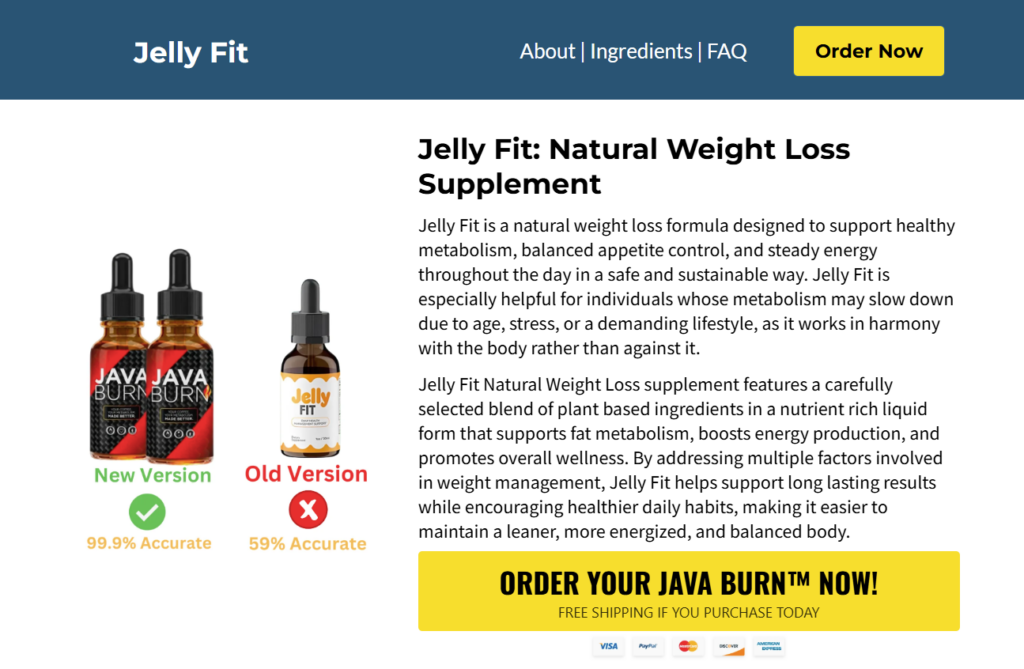
What Is JellyFit Drops Supplement?
JellyFit Drops Supplement is promoted as a liquid dietary supplement aimed at supporting weight loss. It is commonly advertised using bold claims such as:
- Fast belly fat reduction
- Weight loss without dieting
- Appetite suppression
- Faster metabolism
- Improved fat burning
- Higher energy levels
- Better digestion support
Some ads also use phrases like:
- Ice and gelatin trick
- Japanese weight loss secret
- Doctor recommended fat-burning formula
- Hidden metabolism hack
These phrases are commonly used in questionable supplement marketing campaigns to trigger curiosity and urgency rather than trust.
According to the U.S. Food and Drug Administration, consumers should be careful of supplements making unrealistic health claims or promising miracle results.
Useful resource: FDA Dietary Supplements Guide
How JellyFit Drops Claims to Work
Promotional pages claim JellyFit Drops helps the body by:
- Burning stored fat faster
- Reducing food cravings
- Improving metabolism
- Supporting digestion
- Increasing natural energy levels
- Helping the body process calories more efficiently
Sounds impressive.
The problem is that many of these claims are presented without verified clinical studies, peer-reviewed trials, or transparent ingredient evidence.
Real fat loss still depends on:
- Calorie balance
- Physical activity
- Sleep quality
- Hormonal balance
- Long-term consistency
There is no legal shortcut around basic human biology.
Common Red Flags Associated with JellyFit Drops
1. Lack of Ingredient Transparency
This is one of the biggest warning signs.
Before purchasing any supplement, you should clearly see:
- Full ingredient list
- Exact dosage per serving
- Manufacturer information
- Safety warnings
- Third-party testing proof
- Production certifications
If a company hides this information, that is a serious trust problem.
Reliable supplement brands do not operate like mystery boxes.
2. Misleading “FDA Approved” Claims
Many weight-loss supplement ads use phrases like:
- FDA Approved
- Doctor Certified
- Government Verified Formula
Here is the truth.
Most dietary supplements are NOT FDA-approved before they are sold.
The FDA clearly states that it does not approve dietary supplements for safety or effectiveness before they reach the market. Companies themselves are responsible for ensuring product safety.
That means fake FDA logos and false approval claims are major red flags.
Useful resource: FDA 101 Dietary Supplements
3. Fake Scarcity and Urgency Tactics
Examples include:
- Only 3 bottles left
- Offer expires in 10 minutes
- Last chance discount today
- This page will close soon
This is not science.
This is psychological sales pressure.
These tactics are designed to stop you from researching before buying.
Good products do not need panic marketing.
4. Hidden Subscription Charges
Some buyers of similar products report that:
- one-time purchases become monthly subscriptions
- refund requests get ignored
- customer support disappears
- cancellation becomes difficult
Always check:
- billing terms
- subscription agreements
- cancellation policies
- refund guarantees
Read checkout pages like a suspicious auditor.
Because sometimes the real scam is not the supplement, it is the billing system.
Does JellyFit Drops Actually Work?
At present, there is no strong independent clinical evidence proving JellyFit Drops causes major weight loss on its own.
According to the National Center for Complementary and Integrative Health, most dietary supplements marketed for rapid weight loss have not been proven safe or effective long-term.
The U.S. Food and Drug Administration also warns consumers to be cautious of products that sound too good to be true.
Translation?
There is no proven magic “gelatin trick” for overnight belly fat loss.
Weight loss still respects biology, not marketing.
Customer Reviews and Online Complaints
Reviews around products like JellyFit Drops often show the same complaints:
- No visible weight loss results
- Poor customer support
- Delayed delivery
- Refund issues
- Surprise recurring billing
- Fake-looking positive reviews
When every review sounds like:
“This changed my life in 3 days”
…you should probably pause.
Real reviews sound like humans, not badly written movie trailers.
Always prioritize independent review platforms over sales pages.
Better Alternatives to JellyFit Drops
If your goal is real and sustainable fat loss, better strategies include:
High-Protein Nutrition
Protein helps improve fullness, supports muscle preservation, and reduces overeating.
This is boring advice.
It also works.
Resistance Training
Strength training improves metabolism, body composition, and long-term fat management.
Muscle is expensive tissue. Your body pays energy to keep it.
That helps.
Proper Hydration
Poor hydration can worsen cravings, fatigue, and appetite confusion.
Sometimes people are not hungry.
They are just dramatically thirsty.
Better Sleep
Poor sleep affects hunger hormones like ghrelin and leptin, increasing cravings and emotional eating.
Bad sleep quietly sabotages fat loss.
Medical Evaluation
Sometimes the issue is not discipline.
Conditions like:
- PCOS
- thyroid dysfunction
- insulin resistance
- hormonal imbalance
- chronic stress
can make weight loss unusually difficult and require medical attention.
This matters.
Because blaming yourself for biology is bad strategy.
Frequently Asked Questions (FAQs)
Is JellyFit Drops Supplement legit?
It may be sold as a legitimate weight loss supplement, but concerns about unclear ingredients, exaggerated claims, and billing issues make caution necessary. Always verify the manufacturer before buying.
Is JellyFit Drops FDA approved?
Most dietary supplements are not FDA-approved before sale. If JellyFit Drops strongly advertises FDA approval, that claim should be carefully verified because misleading claims are common.
Can JellyFit Drops reduce belly fat?
There is no strong scientific evidence proving JellyFit Drops specifically targets belly fat. Sustainable fat loss requires proper nutrition, exercise, and lifestyle management.
Are there side effects?
Possible side effects depend entirely on the ingredients used. If the ingredient list is hidden, safety becomes impossible to properly assess.
That alone should concern you.
Does JellyFit Drops offer refunds?
Some sellers advertise money-back guarantees, but customer complaints often mention refund difficulties. Always read the full refund policy before payment.
Is JellyFit Drops a scam?
Not every supplement is automatically a scam, but unclear ingredients, fake urgency, hidden billing, and unrealistic promises are serious warning signs that should not be ignored.
Final Verdict: Is JellyFit Drops Worth Buying?
Our Rating: 2/10
If JellyFit Drops follows the common pattern of viral weight-loss drops, it raises more concerns than confidence.
While it may contain basic vitamins or herbal extracts, the weak scientific evidence, aggressive sales tactics, poor transparency, and potential billing risks make it difficult to recommend.
That combination is not wellness.
It is marketing with good lighting.
Conclusion
JellyFit Drops Supplement may look attractive because it promises fast and easy results, but sustainable weight loss does not come from mystery drops and countdown timers.
Before buying any supplement, ask:
- Is the ingredient list transparent?
- Is the manufacturer real and trustworthy?
- Are the reviews genuine?
- Is there strong scientific evidence?
- Are the billing terms safe?
- If the answers are unclear, walking away is usually the smartest move.
- When it comes to your health and your money, skepticism is not negativity.
- It is self-defense.